Food & Cooking
I like to cook, takes my mind of the endless tasks that never seem to stop.
Food & Cooking gallery
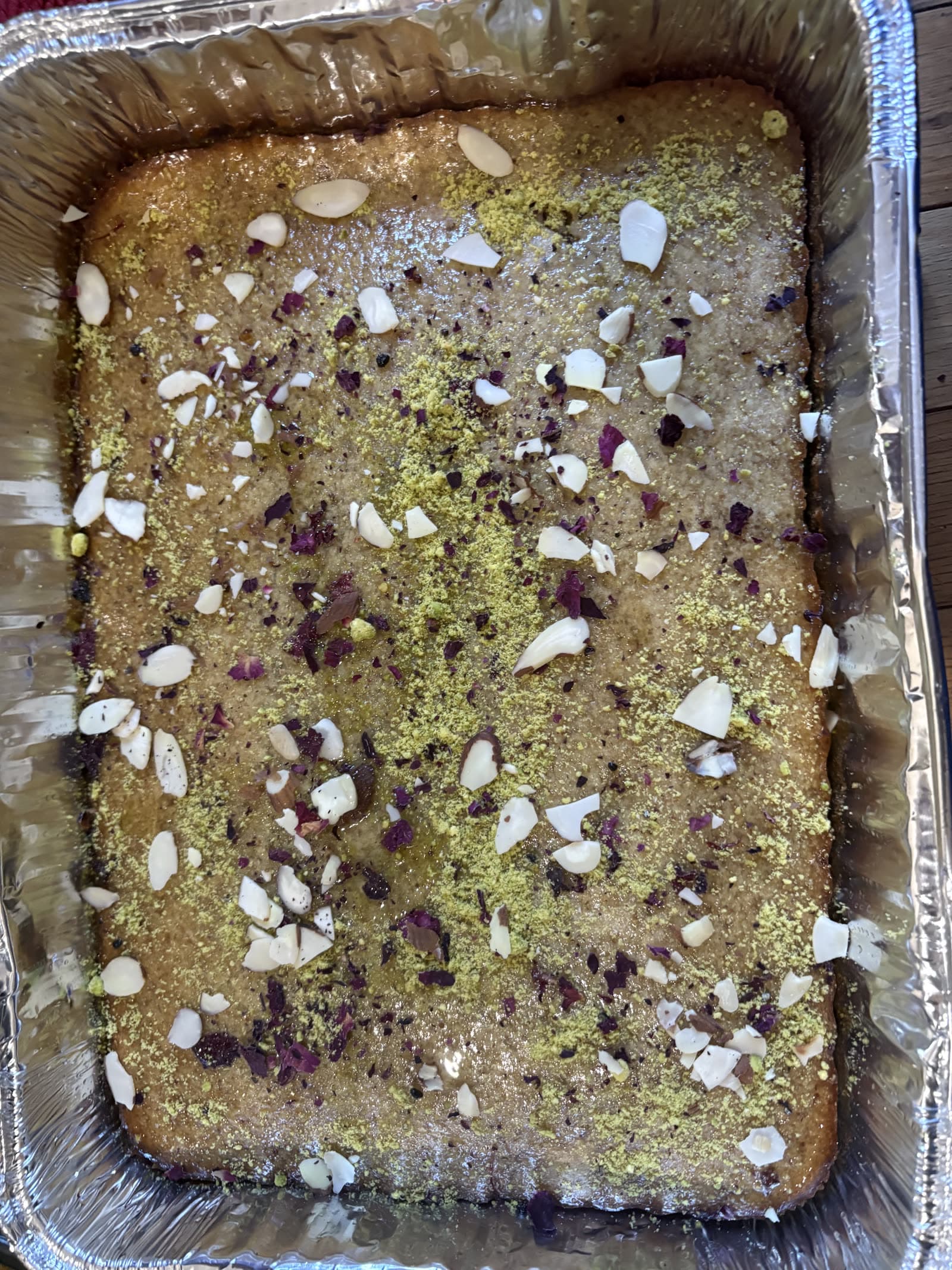
Syrup-soaked gulab jamun cake with pistachios, almonds, and rose petals.
Student at the Massachusetts Academy of Math and Science at WPI, with strong interests in mathematics, science, and engineering.
I am a student at the Massachusetts Academy of Math and Science at Worcester Polytechnic Institute (WPI), with strong interests in mathematics, science, and engineering. I am especially drawn to aerospace and space-related applications, where difficult theoretical ideas have to become reliable real-world systems.
I enjoy problems that require more than a routine answer. Whether I am building a wearable prototype, studying a numerical method in physics, or modeling a networked system, I like working through the full cycle: understanding the question, learning the background, creating a model or prototype, testing it carefully, and improving it based on evidence.
My academic interests include mathematical modeling, scientific computing, engineering design, optimization, control systems, embedded sensing, and large-scale simulation.
Outside of individual projects, I value collaboration, leadership, and helping others learn. My long-term goal is to pursue meaningful work at the intersection of mathematics, engineering, and science—especially in aerospace, technology, or applied research.
If you want to see my school assignments and profile, feel free to visit https://users.wpi.edu/~tmangal/.

I am motivated by questions that are difficult enough to require persistence and creativity.
I enjoy understanding the mathematics and science behind a system—not only using tools, but learning why they work.
I am most excited when models, prototypes, and research can help explain or improve real systems.
Every project follows the same working loop. The table below defines each step; the project rows show how that loop shows up across math modeling, coding & trading, and engineering work.
Question → Research → Build → Test → Improve
| Step | Question | Research | Build | Test | Improve |
|---|---|---|---|---|---|
| What it means | What problem is worth exploring, and what would a useful answer look like? | Learn the theory, study existing work, identify assumptions, and decide what evidence is needed. | Create a model, prototype, algorithm, or design that can make the question testable. | Collect evidence, compare outputs, check assumptions, and look for failure modes. | Use the results to revise the model, design, or experiment—and document what changed. |
I love to cook and I like to just explore functions on desmos.
I like to cook, takes my mind of the endless tasks that never seem to stop.
Syrup-soaked gulab jamun cake with pistachios, almonds, and rose petals.
These are just graphs from when I was messing around, it is just a good way to fill time.
A butteryfly, I tried to make it into one function but I coudl not figure that out.